Why Most Nigerian Businesses Stay Small (And How to Break the Cycle)
Running a business in Nigeria is not easy. Entrepreneurs face rising operating costs, inconsistent power supply, changing economic conditions, and intense competition. Despite these challenges, some businesses continue to grow while many others remain stuck at the same level for years.
The difference is rarely the quality of the product alone. More often, it comes down to the systems behind the business.
If your business depends entirely on your daily presence, manual processes, and scattered tools, growth becomes difficult. Building a scalable business requires more than hard work. It requires structure, automation, and the right technology.
Why Many Businesses Stop Growing
Thousands of businesses launch every year, but only a small percentage achieve sustainable growth. One common reason is that owners spend all their time working in the business instead of building systems that allow the business to operate efficiently.
Growth becomes difficult when every sale, customer inquiry, payment, and follow-up depends on one person.
1. No Central Place to Manage Customers
Many businesses communicate with customers only through WhatsApp or social media. While these platforms are excellent for engagement, they are not designed to manage customer relationships.
Without a centralized customer database, businesses often lose valuable information, forget follow-ups, and miss repeat sales opportunities.
A Customer Relationship Management (CRM) system allows businesses to organize contacts, track conversations, and build long-term relationships with customers.
2. Using Too Many Separate Tools
Many entrepreneurs subscribe to different platforms for payments, email marketing, online stores, forms, invoicing, and customer management.
Although each tool may work well individually, managing multiple subscriptions creates unnecessary complexity. Teams spend more time switching between platforms than serving customers.
Disconnected tools also increase the risk of data loss, duplicate work, and inconsistent customer experiences.
3. Poor Financial Organization
One of the fastest ways to limit business growth is poor financial management.
Many business owners cannot confidently answer questions such as:
- How much revenue did we generate this month?
- Which products are the most profitable?
- Which customers buy repeatedly?
- What are our biggest expenses?
Without accurate financial records and reporting, business decisions become guesses rather than informed strategies.
4. Lack of Business Automation
Repetitive tasks consume valuable time that could be invested in strategy, sales, or customer service.
Examples include:
- Sending invoices manually
- Following up with leads individually
- Recording payments by hand
- Registering customers one by one
- Responding to common inquiries repeatedly
Automation reduces these repetitive tasks, improves consistency, and allows businesses to scale without significantly increasing workload.
5. Making Decisions Without Data
Successful businesses rely on data rather than assumptions.
Business owners should know:
- Where new customers are coming from
- Which marketing campaigns generate the highest return
- Which products perform best
- Which sales channels are most profitable
Access to accurate analytics makes it easier to invest resources where they produce the greatest impact.
What Growing Businesses Do Differently
Businesses that scale successfully usually share several characteristics.
They build systems instead of relying on memory.
They automate repetitive work.
They maintain organized customer records.
They monitor key performance indicators regularly.
They use technology to simplify operations rather than complicate them.
These habits allow owners to focus on innovation, customer satisfaction, and long-term growth.
How Casjoe Biz Helps Businesses Scale
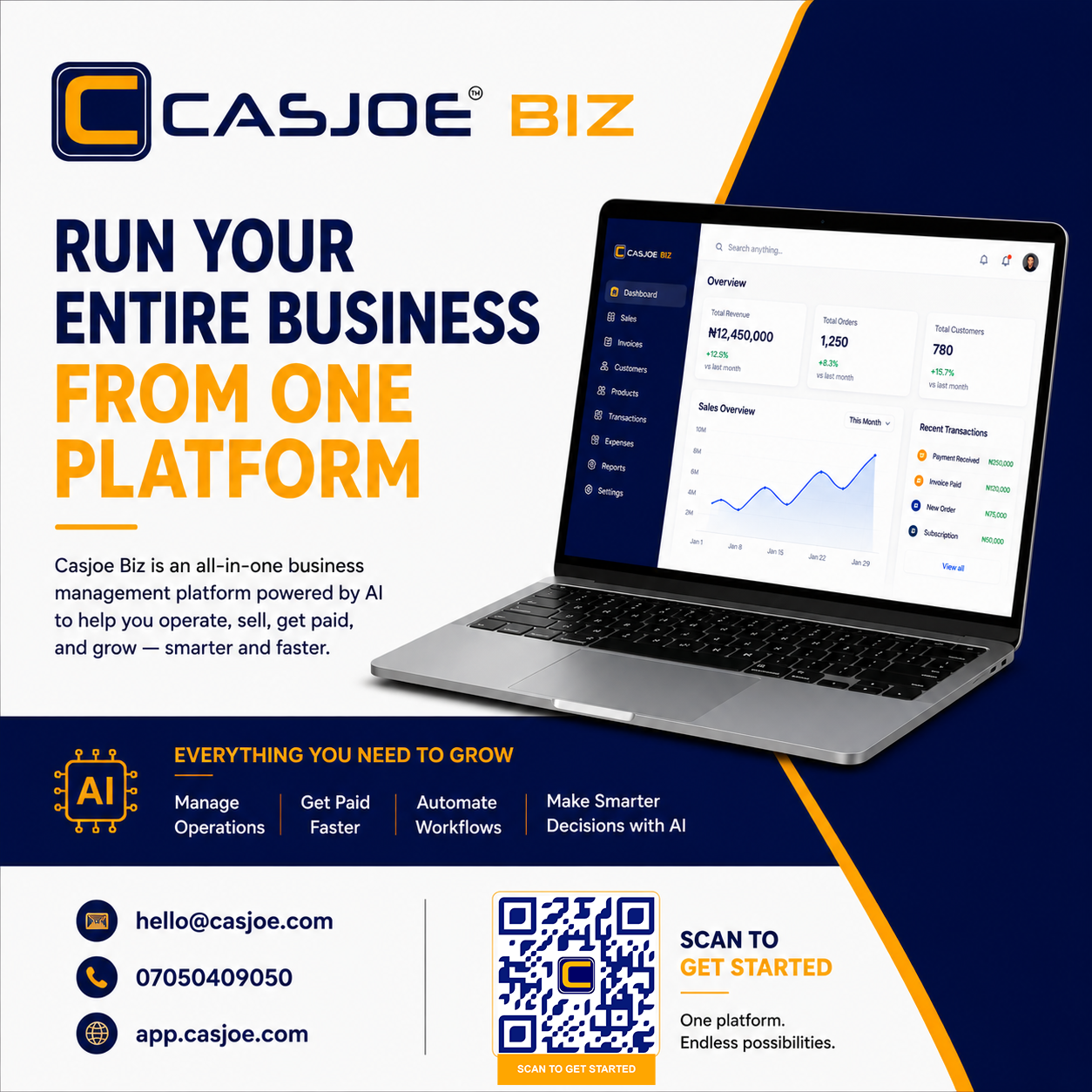
Casjoe Biz was built to eliminate the need for fragmented business tools by bringing essential business functions into one connected platform.
With Casjoe Biz, businesses can:
- Accept payments through an integrated payment system.
- Build and manage an online store.
- Capture leads using smart forms.
- Organize customer relationships with CRM tools.
- Send professional email marketing campaigns.
- Manage business operations from one dashboard.
- Store important business files securely in the cloud.
- Access AI-powered business insights to improve decision-making.
Instead of juggling multiple applications, entrepreneurs can manage their operations through a unified ecosystem designed for growth.
Building a Business That Can Grow
Growth is rarely the result of working longer hours. It comes from creating systems that make your business more efficient, more organized, and more scalable.
Every hour spent building better processes saves countless hours in the future.
Whether you are just starting or managing an established business, investing in the right systems today can position your business for sustainable growth tomorrow.
Businesses that embrace technology, automation, and data-driven decision-making are better prepared to compete in an increasingly digital economy.
The goal is not simply to work harder. The goal is to build a business that continues to grow, serve customers effectively, and create lasting value.
Casjoe Biz was created to help entrepreneurs achieve exactly that by providing one connected platform to operate, manage, and scale their businesses with confidence.
Modernize Your Business Operations with Casjoe Biz
Stop juggling disconnected spreadsheets and fragmented software. Manage your CRM, invoices, inventory, multi-currency payments, and business automation in one unified platform.